Newly Discovered Miniature Dinosaur Challenges Theories About Evolutionary Shrinking
Scientists have long believed that alvarezsaurids, a group of small theropod dinosaurs, underwent evolutionary miniaturization as they adapted to feed on social insects like ants and termites. This straightforward narrative suggested these creatures became progressively smaller to more efficiently hunt their tiny prey. However, a newly discovered fossil species is forcing researchers to reconsider this tidy explanation.
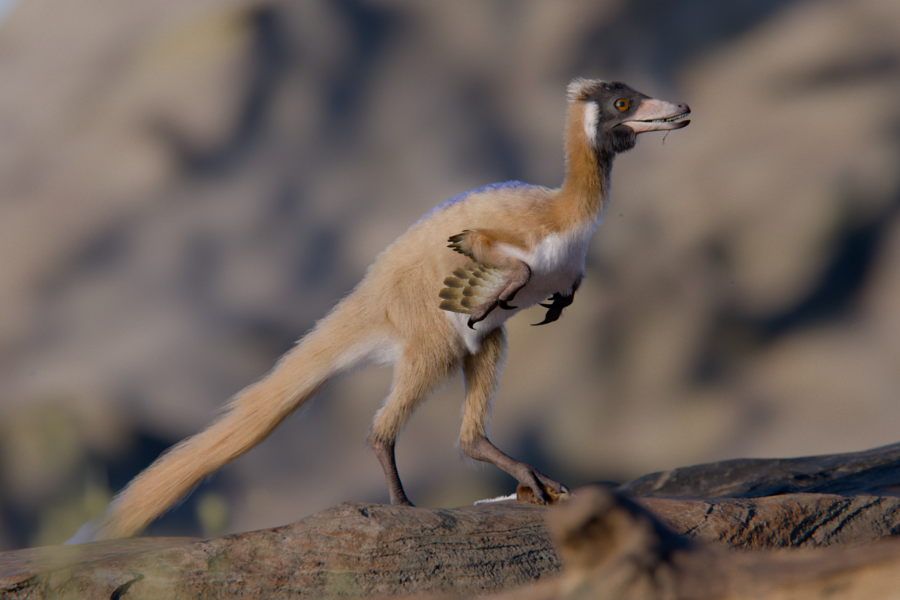
The discovery of Alnashetri cerropoliciensis, one of the smallest alvarezsaurids ever found, reveals that the evolutionary path to miniaturization was far more complex than previously understood. Unlike its specialized relatives, this diminutive dinosaur appears to have been an active pursuit predator that hunted insects and small mammals rather than focusing on ant colonies.
Unexpected Characteristics
Peter Makovicky, a paleontologist at the University of Minnesota, explains that most alvarezsaurids possessed distinctive features suited for their presumed lifestyle: shortened forelimbs ending in large thumb claws perfect for excavating termite mounds, tiny teeth, and sensory adaptations similar to modern nocturnal birds. The scientific community had connected their small stature directly to these specializations.
However, Alnashetri cerropoliciensis presents a different picture entirely. Excavated from Argentina’s Candeleros Formation in the Río Negro Province, this 90-million-year-old specimen represents the most complete and smallest alvarezsaurid skeleton discovered in South America. Despite being nearly mature at the time of death, as evidenced by bone tissue analysis suggesting sexual maturity, the dinosaur weighed merely 700 grams.
The fossil preserves critical anatomical details despite missing portions of its skull, right appendages, and tail. Most significantly, researchers determined that this species occupied an early position in the alvarezsaurid family tree, despite living during the Late Cretaceous period.
Challenging Established Models
This combination of extreme miniaturization and primitive characteristics fundamentally contradicts previous evolutionary models. If body size reduction was strictly linked to specialized insect-eating adaptations, early-diverging species should display transitional features leading toward that specialized endpoint. Instead, Alnashetri exhibits characteristics suggesting a completely different lifestyle.
Makovicky describes the animal as long-limbed and likely quite fast, comparing it to a roadrunner. Unlike later alvarezsaurids with stubby, robust forelimbs less than half the length of their leg bones, Alnashetri possessed relatively elongated arms measuring 61 percent of its hindlimb length. While it retained the characteristic three-fingered hands with a prominent first digit, it also maintained slender second and third fingers unlike its more specialized descendants.
The dental evidence further supports this revised understanding. Rather than the extremely small teeth found in later species like Shuvuuia or Jaculinykus, Alnashetri possessed moderately-sized, non-serrated teeth set in sockets. This anatomical evidence suggests that extreme body size reduction evolved independently from the specialized digging adaptations and modified dentition associated with ant-eating behavior.
Geographic Distribution Revelations
Beyond challenging size evolution theories, this discovery has rewritten understanding of where these dinosaurs lived. Previously, scientists puzzled over why alvarezsaurids appeared almost exclusively in Late Cretaceous deposits from Asia and South America, leading to hypotheses about late-stage migrations between these regions.
However, placing Alnashetri in the evolutionary tree created significant gaps in the fossil record, prompting researchers to reexamine museum collections for misidentified specimens. This investigation proved fruitful, revealing early alvarezsaurids previously classified under different names from the Upper Jurassic Morrison Formation in North America and Lower Cretaceous deposits on the Isle of Wight in Europe.
These reidentifications completely transformed the biogeographical narrative. Rather than limited late-stage dispersal, the evidence now suggests alvarezsaurids achieved a widespread global distribution before the supercontinent Pangaea fully separated. The Late Cretaceous Asian and South American populations likely represent surviving remnants after regional extinctions eliminated them from North America and Europe.
Ongoing Research Questions
While this research successfully challenges the established narrative linking body size reduction to ecological specialization, it raises new questions about what actually drove miniaturization in some alvarezsaurid lineages. Makovicky acknowledges that while they have disproven the previous hypothesis, they lack a comprehensive replacement theory.
Current research efforts focus on two primary approaches. First, detailed CT scanning of Alnashetri specimens in Argentina aims to understand the stepwise evolutionary changes leading to highly specialized forms. Second, the team has discovered another alvarezsaurid in the same region that is larger than Alnashetri with proportionally shorter forelimbs, potentially providing additional evolutionary context.
This ongoing work demonstrates how paleontological discoveries continue to refine our understanding of evolutionary processes, sometimes replacing neat narratives with more complex but accurate pictures of prehistoric life.